East Africa's Green Energy Shift: What It Means for Nordic Investors
East Africa's renewable energy sector is attracting record levels of foreign capital — but the investors moving fastest aren't always the ones you'd expect. Here's what's changing across the region, and what it means for NABA members weighing their next move.

Orli Arav - Founder and Managing Director of EMFin Advisory
There’s something about solar panels.
Photo: ACME Photography
A Region in Transition
Kenya, Tanzania and Ethiopia have spent the past decade building some of the continent's most ambitious renewable energy pipelines — geothermal in the Rift Valley, wind along the coast, solar-plus-storage reaching communities the grid never did. What's changed in the last eighteen months isn't the ambition. It's the financing structure behind it, as blended finance models mature and de-risking instruments become standard practice rather than exception.
Compounding result of a decade of institution-building:
Regulators writing clearer feed-in tariff frameworks
Utilities signing bankable offtake agreements
A first generation of successfully operating projects proving the model works at scale.
Investors entering today are not taking a bet on unproven technology or unproven markets — they are stepping into a track record. Currency volatility and regulatory uncertainty remain real considerations — no serious analysis pretends otherwise. But the conversation has moved from whether these risks can be managed to which instrument manages them best for a given deal structure. That's a meaningfully different starting point for due diligence, and it changes the nature of the advisory relationships investors need going in: less about identifying whether to enter a market, more about structuring the right entry.
Key Terms Explained:
-
A long-term contract between an energy producer and a buyer (often a utility or large corporate) that guarantees a fixed price for electricity over a set period — typically 15–25 years. PPAs are what make renewable energy projects financeable, since they de-risk revenue for lenders.
-
A structuring approach that combines concessional capital (from development finance institutions or donors) with commercial capital, using the concessional layer to absorb early risk and make the deal attractive to private investors who wouldn't enter alone.
-
Financial instruments — swaps, forwards, or local-currency lending facilities — used to protect investors from losses caused by exchange rate movements between hard currency financing and local-currency revenue. Increasingly standard in African infrastructure deals.
Where the Capital Is Moving
Development finance institutions are no longer the only ones writing early-stage checks. Pension funds, infrastructure funds and increasingly corporate balance sheets are entering deals that would have been considered too early-stage five years ago. The shift is most visible in Kenya's wind and geothermal sector, where a handful of landmark projects have demonstrated that East African energy assets can deliver returns comparable to more established emerging markets — with the added benefit of long-term power purchase agreements that provide revenue certainty rare in infrastructure investing generally.
“The projects that used to take seven years to reach financial close are now closing in three. That’s not luck — that’s the market maturing around a set of instruments that actually work.”
Tanzania and Uganda are following a similar trajectory, though roughly two to three years behind Kenya in terms of regulatory maturity. For investors willing to accept a slightly earlier-stage risk profile in exchange for more favourable entry valuations, this gap represents a genuine window — one that regional analysts expect to narrow considerably over the next investment cycle.
The De-Risking Toolkit Matures
What has made this shift possible is not a single breakthrough but the steady accumulation of financial instruments purpose-built for the region's specific risk profile. Partial risk guarantees from institutions like the African Trade and Investment Development Insurance mitigate political and regulatory risk. Local-currency lending facilities reduce the currency mismatch that has historically made dollar-denominated infrastructure debt difficult to service. And a new generation of specialist insurers now offer construction and operational risk products tailored to renewable assets specifically, rather than adapted from oil and gas or mining templates.
Taken together, these instruments have done something subtle but important: they have shifted renewable energy investment in East Africa from a specialist, high-risk allocation to something closer to a standard emerging-markets infrastructure play — still carrying real risk, but risk that is now well-understood, well-priced, and manageable with the right structuring.
Sector Spotlight: Mini-Grids and Distributed Energy
Beyond utility-scale wind and geothermal, one of the fastest-growing segments is distributed and mini-grid solar — systems that serve communities and commercial users beyond the reach of the national grid. This segment has historically been dominated by donor-funded pilots, but commercial operators are increasingly proving out sustainable, investable business models, particularly where mini-grids serve productive commercial and agricultural loads rather than residential demand alone. For investors with an appetite for smaller ticket sizes and a longer relationship-building horizon, this segment offers a different but complementary entry point to the utility-scale opportunities described above.
Wind, Solar and Hydro: East Africa's Energy Shift in Pictures
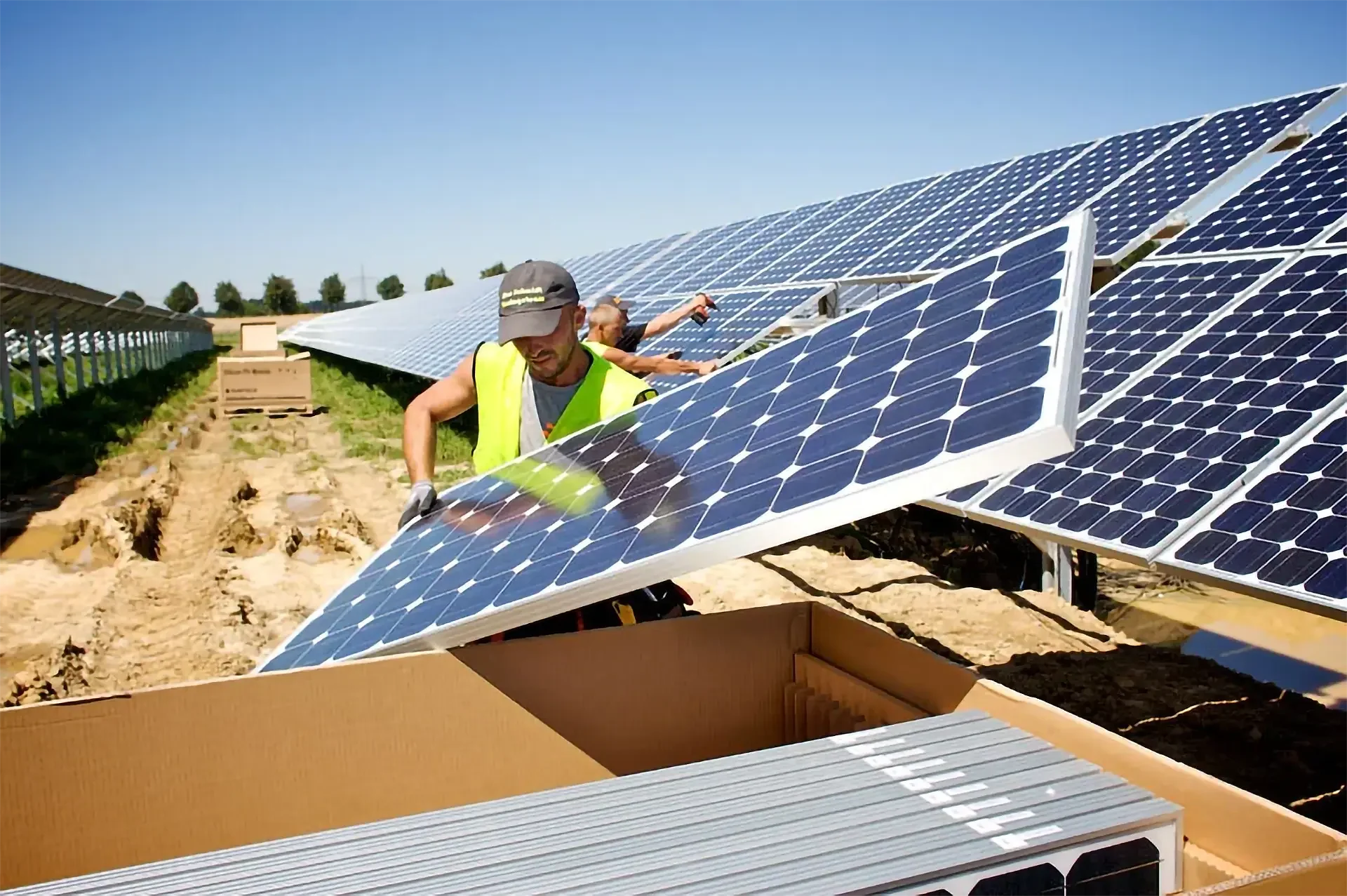


East Africa's Renewable Energy Projects in Focus.
Photos: Dean Fresco / Solar Renewables Inc.
What This Means for NABA Members
For members already active in the region, the financing landscape now supports larger, longer-horizon commitments than were realistic even three years ago. Deal sizes that once required syndication across four or five DFIs can now often be structured with two or three commercial and institutional partners, meaningfully reducing transaction complexity and time to close.
For those exploring entry, the barrier to a credible first deal is lower than it's been — provided the right local and financial partners are in place from the start. NABA's network across both the Nordic investor community and East African project developers exists precisely to shorten that initial search: connecting members with vetted local partners, co-investors with aligned risk appetite, and the advisory relationships needed to structure a first transaction with confidence.
Looking Ahead
The next eighteen months will likely determine whether Tanzania and Uganda close the regulatory gap with Kenya, and whether mini-grid operators can demonstrate the kind of scaled profitability that attracts institutional rather than purely developmental capital. Both are worth watching closely — and both will be covered as they develop in future NABA Insights pieces.
In partnership with: