
Brief summary – “Human Resources in Africa” breakfast seminar
“The role of human resources has never been more imperative, as we witness the rapidly changing landscape of international business.” As eloquently stated by Ms. Nita Kapoor, the Director General of FK Norway, Human Resources is an essential resource in development business, and integral aspect of the internationalization of companies.
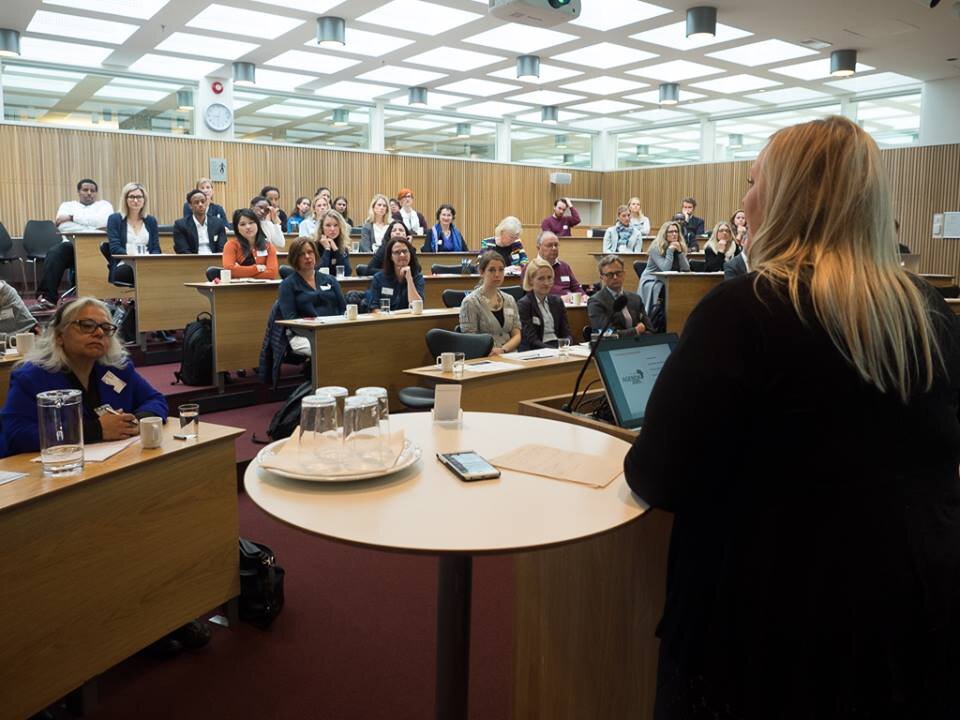
The Human Resources in Africa breakfast seminar addressed how companies could overcome the challenges and reap the benefits of the internationalization of the personnel. The Norwegian African Business Association (NABA) and FK Norway invited representative from leading companies, including Yara International, Laboremus and Navigio, to address the implications and share their main findings. In addition to the illuminating talks, NABA introduced a tool that would assist their companies in successful talent acquisition.




Strengthen local HR
The need to strengthen the HR management at a local level remained a reoccurring theme throughout the seminar. Ms Sigrid Noreide, Talent and Leadership Manager EMEA and HR Manager Africa at Yara International, highlighted this particular point as she stressed the importance of structure and planning. More importantly, building relationships in order to establish trust is essential, as managers are met with scepticism. In Ms Noreide case, this meant participating in field trips in order to understand the work environment of the employees. This kind of flexibility and creativity is necessary to develop a competent team.
Effective communication and managing expectations
As part of the FK exchange program, Laboremus has participated in the mutual exchange of personnel. Marie Holter, Project Manager at Laboremus, discussed some of the cultural differences that underpinned the work culture. For instance, the hierarchical structure could impede effective communication, as management would be less accessible. This issue is quite problematic, as effective communication remains crucial in the development of competence and an overall robust team.
Furthermore, some employees might have extensive theoretical knowledge but lack the practical experience. In these instances, the learning curve is quite steep, and the position might not be relevant anymore. This also pertains to returnees who have participated in exchange programs. Managing their expectations and developing opportunities that allow further growth is vital for employee retention
International recruitment
Due to globalisation, companies have access to a greater and more diverse talent pool than ever before. This offers companies endless opportunities, as well as challenges. One of these challenges include high turnover rate in emerging countries. This reality is quite problematic as a 2015 LinkedIn survey found ‘quality of hire’ most important issue for business leaders. To tackle this issue, Mr Filip Strömbäck, Senior Manger, Executive Search and Assessment, and Ms. Rosalind Møyholm, Engagement Manager, Navigio AS, emphasized the need to centralize the recruitment process. A standardized process that outlines how to evaluate success could create a more sustainable solution and decrease the turnover.
The speakers’ illuminating insights offered attendees a brief overview of some of the key opportunities and challenges in HR and international recruitment. As highlighted throughout the seminar, a stronger and more competent HR management will curb quite a few of these challenges.
By Hibak Yusuf / NABA team – all photos from Liz Palm, FK Norway